Photo Trekking 1: St. Mary's Watershed

March 20, 2010  •  Leave a Comment

[This is my 1st installment in a 6-part series for a photo trekking class I took with Barbara Southworth through the Smithsonian Associates Residence Program.]

I signed up for a class called “Photo Trekking”. It’s a 6-week nature photography course that involves hiking in scenic spots near Washington, DC. The course is being taught by the Smithsonian Resident Associate Program and the instructor is Barbara Southworth, a photographer who specializes in place-based and landscape imagery.

Our first hike was at St. Mary’s Watershed. We met up at 7:00 am to watch the sun rise and then set out on the 7.1 mile hike.

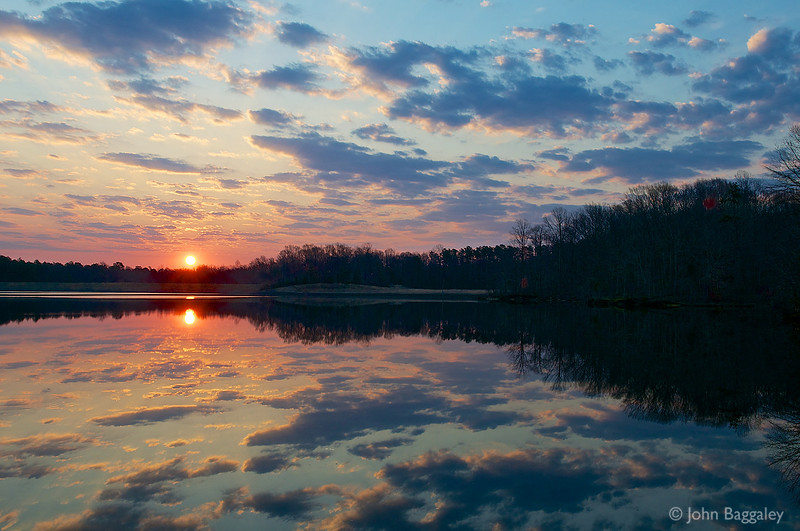
My first photo was of the sunrise. It was absolutely spectacular! We were blessed with patchy clouds and a perfectly still lake.

Sunrise at St. Mary’s WatershedSunrise at St. Mary’s WatershedIn this early morning shot of the sun rising over St. Mary's Watershed in Maryland, patchy clouds are reflected in the mirror-like surface of the lake. I didn't have long to take this image; the mirror effect didn't last more than a few minutes. As the sun rose, it heated the air, causing the air to move over the water and break the stillness.

Generally, you only get a mirror-like lake when the air is perfectly calm. This calm ends once the sun rises and heats the air. The heated air moves across the water and causes ripples, which destroys the effect. I did my best to take advantage of the time--it doesn’t last long.

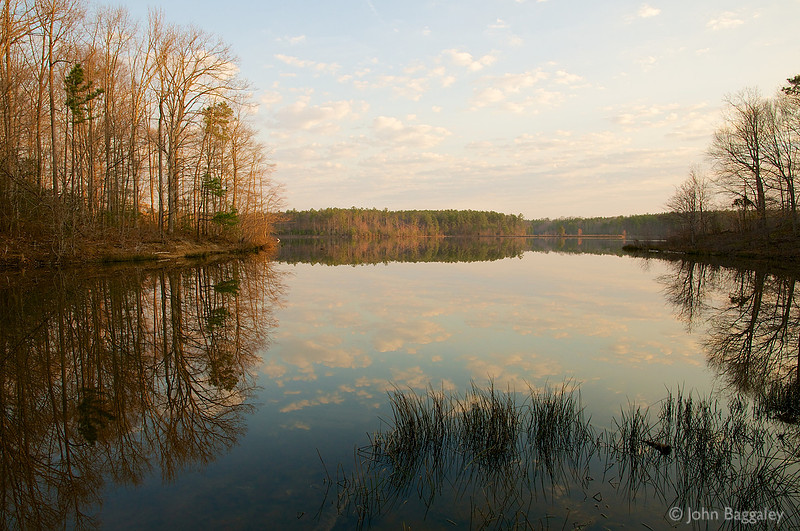
My first couple of photos were taken from a jetty in the middle of the lake. I took the following from a small inlet not too far away. The light had a very warm feel and I made sure to keep that in my prost-processing.

Early morning at St. Mary's WatershedEarly morning at St. Mary's WatershedEarly morning, St. Mary's Watershed.

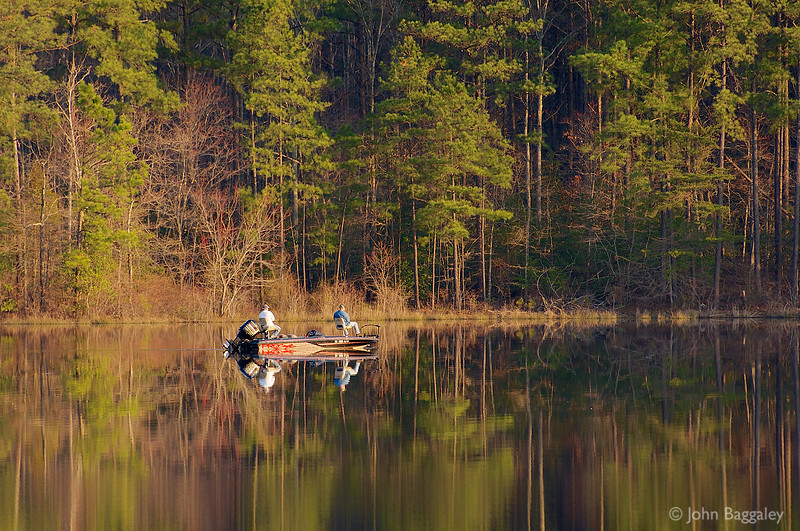
There were a number of fishermen who decided to get an early start on the lake as well. I figured it would be nice to get a shot with one of their boats--I think it adds a little depth and interest to the photo. To take the following photo, I abandoned my wide-angle lens and pulled out my telephoto. You can see that a slight breeze is picking up and disturbing the water.

Fishing at St. Mary's WatershedFishing at St. Mary's WatershedA couple of guys fishing in the early morning light at St. Mary's Watershed in Maryland.

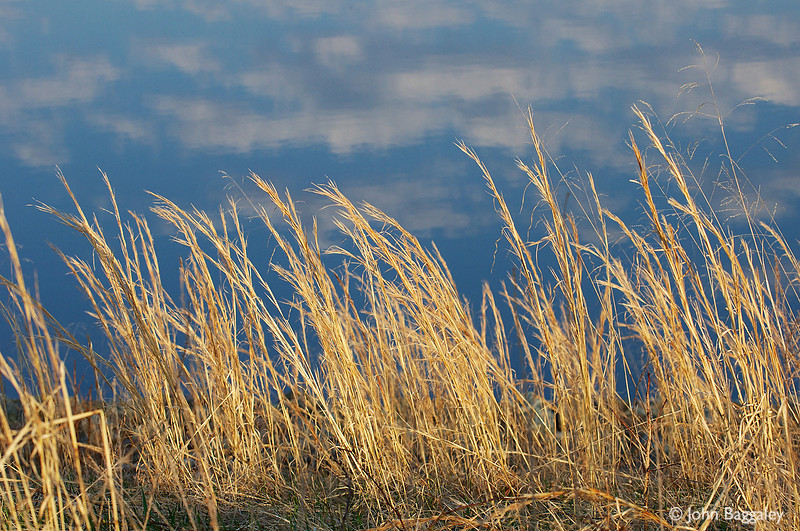
The dam for the watershed runs north and south. With my back to the sun and shooting at a downward angle, I was able to take this shot of some grass. The blue behind the grass isn’t sky but water reflecting the sky.

Dry grassDry grassDry grass on the dam at St. Mary's Watershed, in the golden light of dawn, and against a backdrop of water reflecting a blue sky.


The Snowmageddon

February 06, 2010  •  Leave a Comment

Lincoln Memorial covered in snowLincoln Memorial covered in snowIn the 2009-2010 winter season, the Washington, D.C., metro region got hit with three major blizzards, breaking the 111-year record for the most snowfall in the metro region, exceeding the last record set of 54.4" in the 1898-1899 winter season. In 2009-2010, Washington National Airport received 56.1" compared to 15.2" average; 77.0" for Baltimore compared to 18.2" average; and 73.2" at Dulles International Airport compared to 21.2" average.

Each of the three major snowstorms had a nickname. The first was the Snowpocalypse, which dumped about 14 inches of snow on the Capitol, just days before Christmas. The second, in February, was the Snowmageddon, with 8 to 20 inches. Snowverkill occurred only days later, dropping another 14 inches on the Capitol.

The Snowmageddon and Snowverkill shut down the Capitol completely. No cars could travel on the roads, the metro shut down, and restaurants and stores closed. The city became quiet... and beautiful. This image of the Lincoln Memorial was taken during the Snowmageddon.

On Saturday, February 6, 2010, Washington, D.C., got hit with Snowmageddon, the second major storm of the 2009-2010 winter season. I had thought that the Christmas storm was bad. (Just before Christmas, the Snowpocalypse dumped 16 inches of snow on the metro region.) But on February 6, Snowmageddon slammed us with another 18 inches of snow. Some areas near DC got as much as 33 inches in one day! And just when we thought things were already absurd (remember we only had one storm last year and all the snow melted by the afternoon), Snoverkill hit the region only 5 days later, dropping another 10 inches of snow on us.

United States flag and Capitol dome pelted with snow, the first day of the Snowpocalypse, a storm with record snowfall that hit the Washington metro region in 2010.
Snowmageddon began Friday night and continued Saturday morning and throughout the day. With this much snow and the historic nature of the storm (just Snowpocalypse and Snowmageddon together pushed the District past its record snowfall for one season, which was set way back in 1898), I just had to go out and take some photos. I began taking photos of the Hill around and near Eastern Market.

Eastern Market, the first day of the Snowpocalypse, a storm with record snowfall that hit the Washington metro region in 2010.

The District couldn’t handle the snow. Businesses, bars, and restaurants all shut down.

The Hawk 'n Dove bar on Capitol Hill, the first day of the Snowpocalypse, a storm with record snowfall that hit the Washington metro region in 2010.

Most of the streets were uncleared. It was impossible to drive anywhere. Sidewalks were piled high with snow. People resorted to walking in the middle of the street. Some took to skis.

And despite the freezing temperatures and continued snowfall, many DC residents decided it was time to play. A huge snowball fight erupted on the Mall.

Snowball fight on the Mall during the first day of the Snowpocalypse, a storm with record snowfall that hit the Washington metro region in 2010. Snowball fight on the National MallSnowball fight on the National MallIn the 2009-2010 winter season, the Washington, D.C., metro region got hit with three major blizzards, breaking the 111-year record for the most snowfall in the metro region, exceeding the last record set of 54.4" in the 1898-1899 winter season. In 2009-2010, Washington National Airport received 56.1" compared to 15.2" average; 77.0" for Baltimore compared to 18.2" average; and 73.2" at Dulles International Airport compared to 21.2" average.

Each of the three major snowstorms had a nickname. The first was the Snowpocalypse, which dumped about 14 inches of snow on the Capitol, just days before Christmas. The second, in February, was the Snowmageddon, with 8 to 20 inches. Snowverkill occurred only days later, dropping another 14 inches on the Capitol.

The Snowmageddon and Snowverkill shut down the Capitol completely. No cars could travel on the roads, the metro shut down, and restaurants and stores closed. In the midst of it all, several hundred people gathered on the National Mall for an enormous snowball fight.

The storm turned the Mall into a winter wonderland.

Merry-go-round in front of the Smithsonian on the Mall during the first day of the Snowpocalypse, a storm with record snowfall that hit the Washington metro region in 2010.

The Constitution Garden Pond looked particularly beautiful.

View of the Washington Monument from the Constitution Gardens Pond during the first day of the Snowmageddon, a storm with record snowfall that hit the Washington metro region in 2010.

I took many photos of the Mall on Saturday, but after wondering around the Hill and the Mall for 5 hours in a snowstorm, I got cold, tired, and hungry. So, I set out for home. As I walked home, the storm subsided and the sun began to set. I then encountered some of my best photo opportunities of the day.

Here are two of my favorites of the Washington Monument and the Tidal Basin.
Washington Monument at sunset reflected in a snowy Tidal Basin

I found this view of the Smithsonian Air and Space Museum stunning.

A snowy Smithsonian Air and Space Museum at sunsetA snowy Smithsonian Air and Space Museum at sunsetIn the 2009-2010 winter season, the Washington, D.C., metro region got hit with three major blizzards, breaking the 111-year record for the most snowfall in the metro region, exceeding the last record set of 54.4" in the 1898-1899 winter season. In 2009-2010, Washington National Airport received 56.1" compared to 15.2" average; 77.0" for Baltimore compared to 18.2" average; and 73.2" at Dulles International Airport compared to 21.2" average.

Each of the three major snowstorms had a nickname. The first was the Snopocalypse, which dumped about 14 inches of snow on the Capitol, just days before Christmas. The second, in February, was the Snowmageddon, with 8 to 20 inches. Snoverkill occurred only days later, dropping another 14 inches on the Capitol.

The Snowmageddon and Snoverkill shut down the Capitol completely. No cars could travel on the roads, the metro shut down, and restaurants and stores closed. The city became quiet... and beautiful.

In this image of the Smithsonian Air and Space Museum at the end of the Snowmageddon, the storm has just broken, the snow has stopped falling, the clouds are parting, and the sun is beginning to set.

With the exception of the few photos I took on my way home at the end of the day, most of my photos from Saturday were solid white, with a white sky over a white landscape. The bleakness of the photos provide some drama, demonstrating the severity of the storm. However, it would have been nice to get some more color.

On Monday, the snow still blanketed the District, but the Sky was blue and the sun was shinning. I decided to see if I could get some good sunset pictures of the Capitol. So, once again, I set out in the cold to stand knee deep in snow for a couple hours as I watched the sun slowly set over the district. And I’m glad I did. Here’s one of the Capitol at dusk:

Dusk befalling a snow-covered Capitol after the SnowmageddonDusk befalling a snow-covered Capitol after the SnowmageddonIn the 2009-2010 winter season, the Washington, D.C., metro region got hit with three major blizzards, breaking the 111-year record for the most snowfall in the metro region, exceeding the last record set of 54.4" in the 1898-1899 winter season. In 2009-2010, Washington National Airport received 56.1" compared to 15.2" average; 77.0" for Baltimore compared to 18.2" average; and 73.2" at Dulles International Airport compared to 21.2" average.

Each of the three major snowstorms had a nickname. The first was the Snopocalypse, which dumped about 14 inches of snow on the Capitol, just days before Christmas. The second, in February, was the Snowmageddon, with 8 to 20 inches. Snoverkill occurred only days later, dropping another 14 inches on the Capitol.

The Snowmageddon and Snoverkill shut down the Capitol completely. No cars could travel on the roads, the metro shut down, and restaurants and stores closed. The city became quiet... and beautiful.

In this image, taken just days after the Snowmageddon, dusk falls on a snow-covered Capitol.


The Capitol during the Snowpocalypse

December 08, 2009  •  Leave a Comment


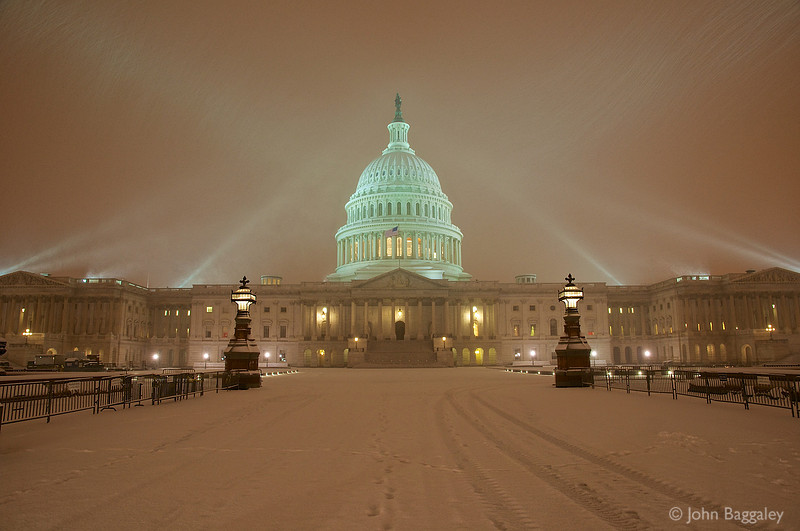
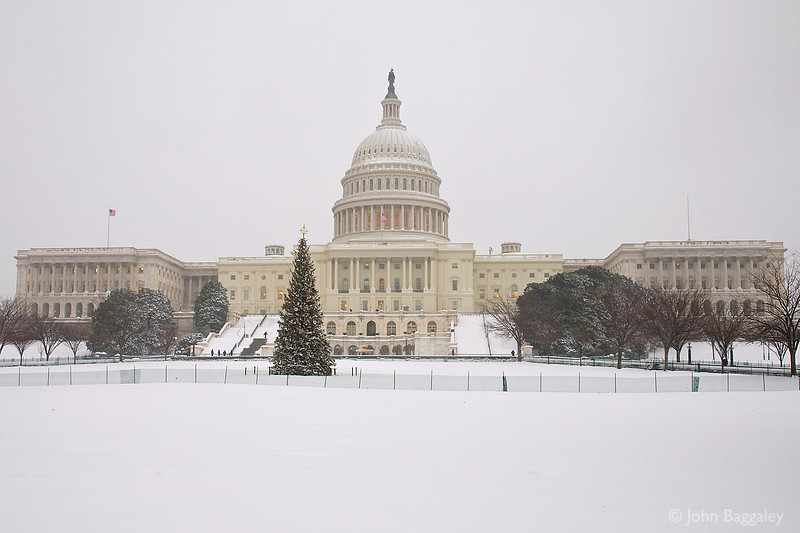
East side of the Capitol at night during a snowstorm: the lights are on as the Senate works late to pass the Defense appropriations bill. The Senate needs to pass the Defense appropriations bill quickly so that the Senate will have enough time to pass the Senate health care bill before Christmas.

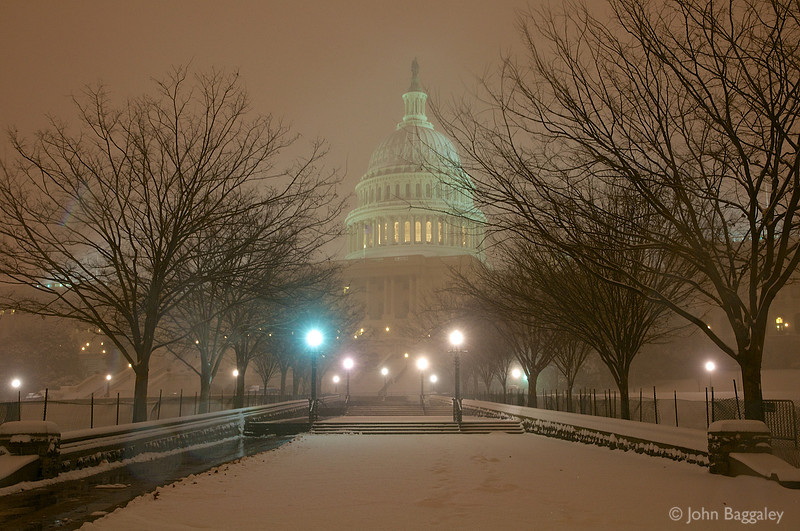
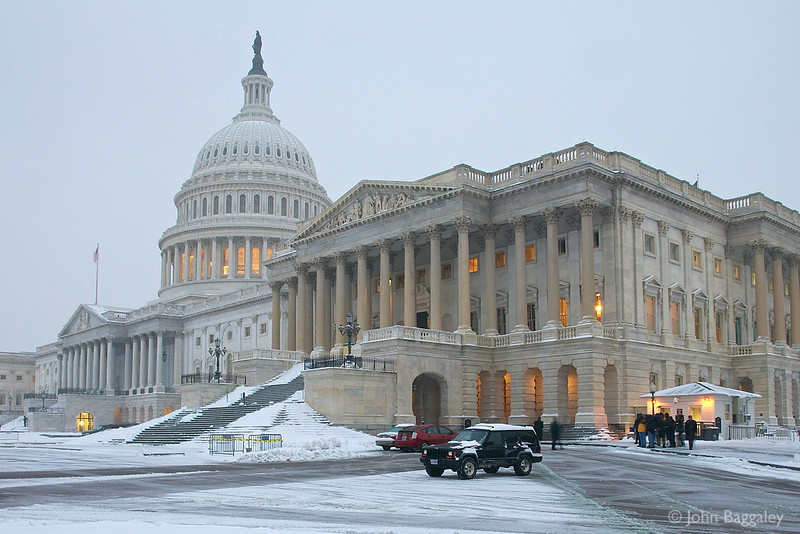
On December 19, 2009, a large storm dumped 14 inches of snow on Washington, DC. This storm was nicknamed the "Snowpocalypse" and was the first of 3 major blizzards to hit Washington, DC, during the winter of 2009-2010. (The other 2 storms are known as "Snowmageddon" and "Snoverkill".)

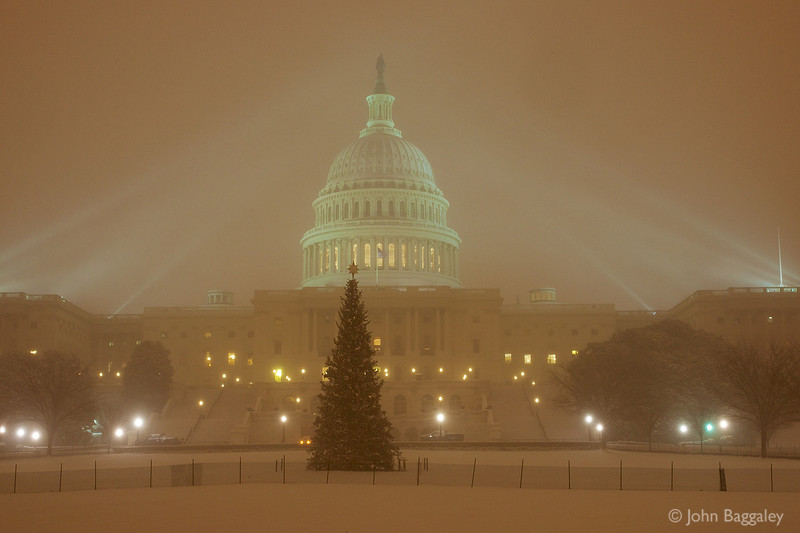
At about 1:30 in the morning and again at dawn, I set out in the Snowpocalypse to photograph the Capitol. I shot most of the photos at a wide angle with my Nikon D90 and 16-85mm VR. Because my camera isn’t weather proof, I kept it wrapped in a shower cap. I removed the shower cap just briefly to reveal the lens. Unfortunately, the snow was coming down pretty hard and the wind blew the snow into my lens. As a result, you can see flare on some of the photos.

You may notice that in some of the photos you can see lights on in the Capitol. The Senate was in session all night long. The Democrats were hoping to pass the Senate version of the Patient Protection and Affordable Care Act before Christmas.

Capitol at night with a Christmas tree during a snowstorm: the lights are on as the Senate works late to pass the Defense appropriations bill. The Senate needs to pass the Defense appropriations bill quickly so that the Senate will have enough time to pass the Senate health care bill before Christmas. Capitol at night during a snowstorm: the lights are on as the Senate works late to pass the Defense appropriations bill. The Senate needs to pass the Defense appropriations bill quickly so that the Senate will have enough time to pass the Senate health care bill before Christmas.

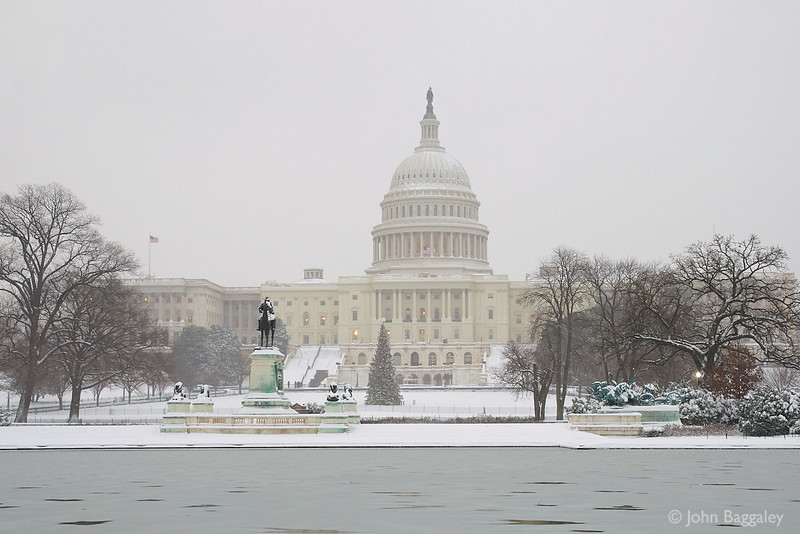
East front of the Capitol at sunrise during the Snowpocalypse: the lights are on and the Senate has worked all night to pass the Defense appropriations bill. The Senate needed to pass the Defense appropriations bill quickly so that the Senate would have enough time to pass the Senate version of the Patient Protection and Affordable Care Act before Christmas.

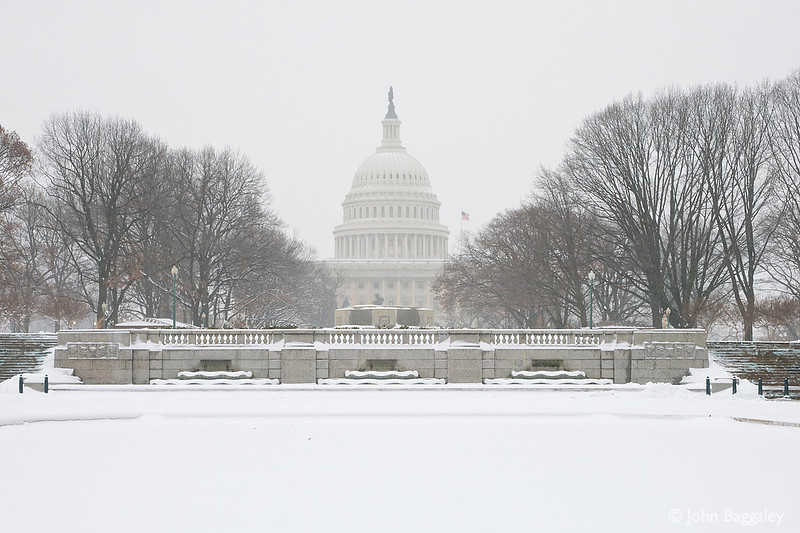
West side of the Capitol at dawn during the Snowpocalypse. The Senate just worked all night to pass the Defense appropriations bill. The Senate needed to pass the Defense appropriations bill quickly so that the Senate would have enough time to pass the Senate version of the Patient Protection and Affordable Care Act before Christmas. West side of the Capitol with the Christmas tree at dawn in a snowstorm. The Senate just worked all night to pass the Defense appropriations bill. The Senate needed to pass the Defense appropriations bill quickly so that the Senate would have enough time to pass the Senate health care bill before Christmas. West side of the Capitol with the Christmas tree at dawn in a snowstorm. The Senate just worked all night to pass the Defense appropriations bill. The Senate needed to pass the Defense appropriations bill quickly so that the Senate would have enough time to pass the Senate health care bill before Christmas. North side of the Capitol at sunrise during the Snowpocalypse. The Senate just worked all night to pass the Defense appropriations bill. The Senate needed to pass the Defense appropriations bill quickly so that the Senate would have enough time to pass the Senate version of the Patient Protection and Affordable Care Act before Christmas.

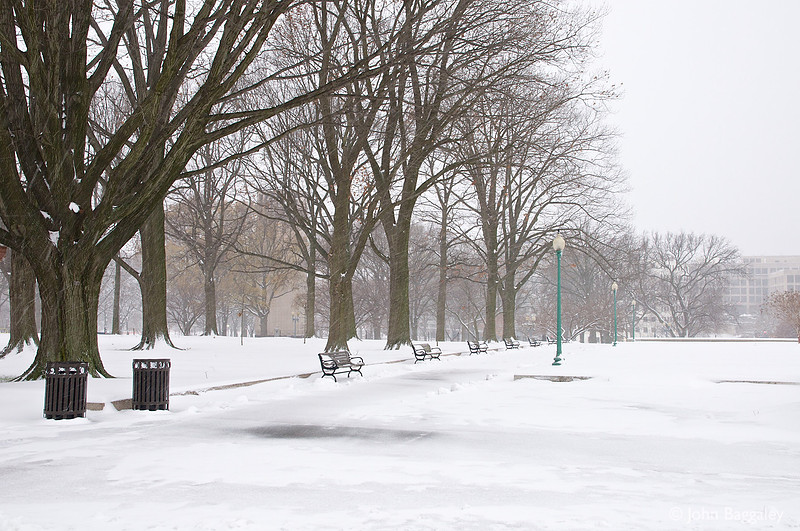
Park north of the Capitol. 14 inches of snow accumulated in one day.

 
Subscribe
RSS
Archive
January February March April May June July August September October November December (1)
January (1) February March April (1) May (1) June (1) July August (1) September (1) October November (1) December
January February (1) March April (1) May (1) June July (1) August September October (1) November (4) December (2)
January February March (1) April May June (2) July August (1) September October (1) November (1) December (3)
January (1) February (1) March April (1) May June July (2) August September (1) October November December (1)
January February March April (1) May June July August September (1) October November December